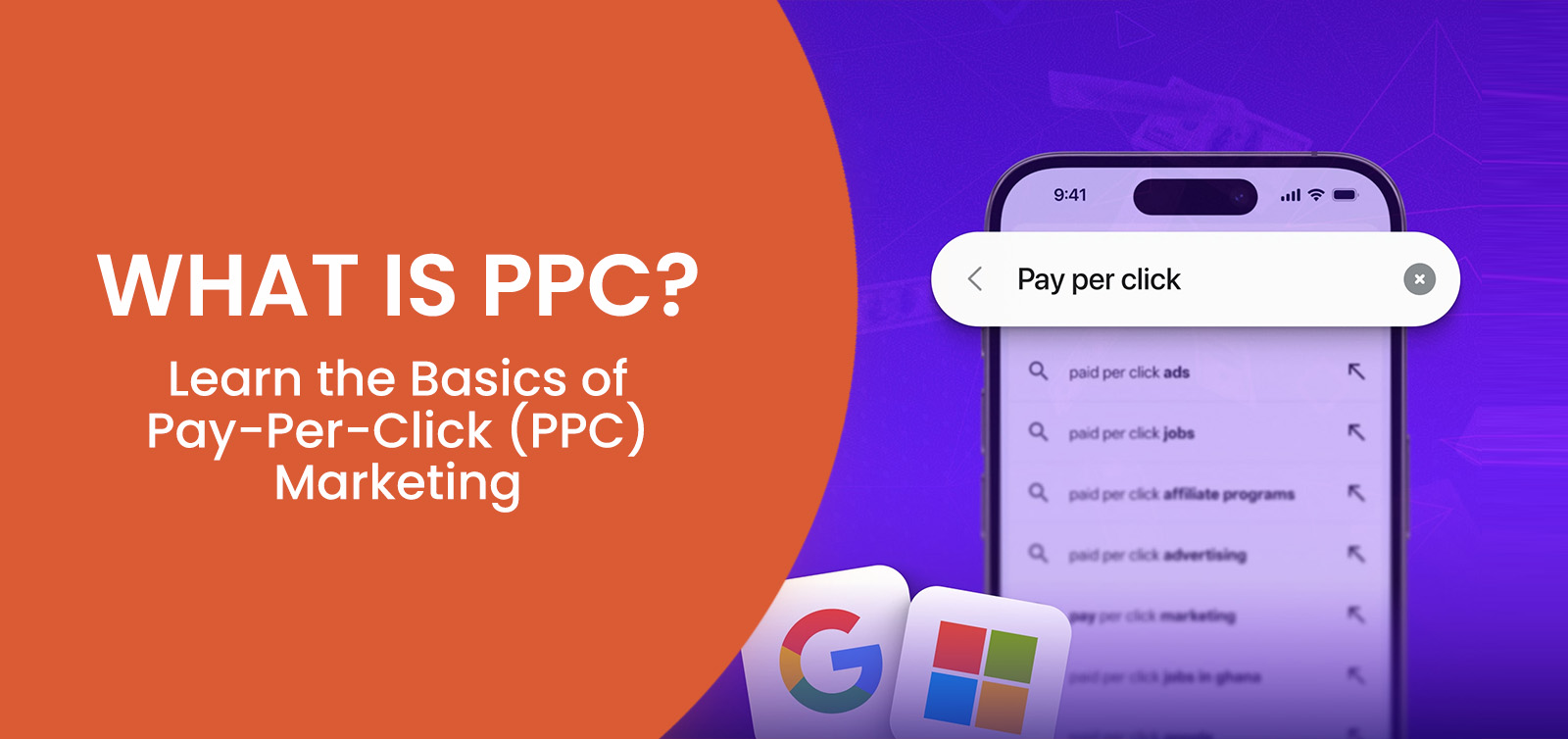
Imagine paying only when a potential customer actually clicks your ad. That’s the power of pay per click advertising, and it’s why PPC has become one of the most important tools in modern digital growth.
At its core, PPC is a performance-focused online advertising model. Instead of paying for exposure or guesses, businesses pay for action. This makes PPC especially attractive for marketers who want clarity, control, and measurable outcomes. From startups testing their first campaign to established brands scaling revenue, PPC marketing basics remain the same: attract the right audience at the right moment.
This guide is designed to remove confusion around PPC. It breaks down how pay per click advertising works, why it matters, and how beginners can approach it strategically—without jargon or overwhelm. By the end, readers will understand not just what PPC is, but how it fits into real-world marketing decisions and business growth.
What Is PPC? A Clear, Beginner-Friendly Definition
PPC advertising, or pay per click advertising, is a digital marketing model where advertisers pay only when someone clicks their ad. Unlike traditional advertising that charges upfront for visibility, PPC charges for engagement.
What makes PPC different from other online marketing channels is intent. In paid search advertising, ads appear when users actively search for something specific. That means the audience isn’t passive, they’re already looking. PPC simply places the business in front of that intent at the right moment.
This is why PPC is a core pillar of performance marketing. Every click can be tracked, measured, and optimized. Marketers can see what keywords triggered the ad, what message convinced the user, and what happened after the click.
In simple terms, PPC connects intent to action. A user searches. An ad appears. A click happens. From there, the journey toward conversion begins, making PPC one of the most direct and controllable forms of online advertising.
Why PPC Is a Must in Digital Marketing Today
In today’s fast-moving online marketing landscape, waiting months for results isn’t always practical. This is where PPC plays a critical role. As part of performance marketing, PPC delivers speed, flexibility, and measurable outcomes that many businesses need to stay competitive.
One major reason PPC matters is control. Campaigns can be launched, paused, adjusted, or scaled in real time. Budgets are flexible. Messaging can be tested quickly. Results are visible almost immediately. This makes PPC ideal for promotions, product launches, and demand-driven campaigns.
Many businesses pair PPC with SEO because they serve different purposes. SEO builds long-term visibility, while PPC captures immediate demand. Together, they cover both short-term wins and sustainable growth.
PPC also works across business sizes. A local business can target nearby customers searching right now. A global brand can reach audiences across regions with precision. When used correctly, PPC turns visibility into action, and action into measurable business value.
How PPC Works: From Ad Auction to Click
Behind every PPC ad is an auction, not the highest bidder wins, but the most relevant one. In paid search advertising, platforms like Google Ads use an auction model to decide which ads appear and where.
It starts when a user searches for something. That search triggers an instant auction among advertisers bidding on related keywords. Each advertiser sets a maximum bid, but money alone doesn’t decide placement. Quality matters.
Search engines calculate something called Ad Rank, which is based on bid amount, ad relevance, expected click-through rate, and landing page experience. This is why smaller advertisers can compete with bigger budgets if their ads are more relevant.
Once ads are ranked, they appear on the results page. If the user clicks, the advertiser pays, hence pay per click advertising. From that moment, tracking begins. The click is recorded, user behavior is measured, and conversions can be attributed back to the campaign.
The simplified flow looks like this: a user searches, the PPC platform runs an auction, ads are placed based on relevance and bid, a click happens, and the advertiser pays. What happens after the click, on the landing page, often determines success more than the ad itself.
Core PPC Platforms (And Where They Shine)
Not all PPC advertising platforms serve the same purpose. Each one excels at different stages of the buyer journey.
Google Ads is the largest and most intent-driven platform. It captures users actively searching and supports search, display, shopping, and video placements. For most businesses, Google Ads is the foundation of paid search advertising.
Microsoft Advertising offers access to Bing and related networks. While smaller in scale, it often delivers lower competition and cost-effective clicks, especially in specific regions and industries.
Meta Ads operate differently. Instead of search intent, they leverage audience behavior and interests. These social PPC campaigns work well for discovery, retargeting, and demand generation.
LinkedIn Ads focus on professionals and decision-makers, making them ideal for B2B campaigns. YouTube paid placements blend video content with intent signals, supporting both awareness and conversions.
Choosing the right platform isn’t about presence everywhere, it’s about aligning platform strengths with business goals.
Google Ads 101: How It Powers PPC Campaigns
Google Ads PPC is the engine behind most pay per click advertising campaigns. It allows advertisers to appear across Google Search, websites, YouTube, and shopping results, all through a single platform.
Search ads target users actively looking for solutions. Display ads focus on visibility across websites. Shopping ads showcase products visually. Each format serves a different purpose, but they all rely on the same bidding and relevance system.
Google Ads pricing works on auctions, not fixed rates. Advertisers set bids, but actual costs depend on competition and quality. Well-structured campaigns often pay less per click than poorly organized ones.
Campaign structure is where beginners struggle most. Google Ads uses campaigns, ad groups, and keywords to stay organized. When structure is messy, ads become irrelevant and costs rise. Strong Google Ads management starts with clarity, clear goals, clean segmentation, and aligned landing pages.
Most PPC failures don’t come from bad platforms. They come from weak structure, unclear intent, and rushed setup.
Top PPC Marketing Basics: Key Concepts You Must Know
Before running any PPC advertising, it’s important to understand the building blocks that control performance. These concepts work together, and missing even one can quietly increase costs.
Keywords are the terms users search for. Match types decide how closely a search must match the keyword before an ad appears. Quality Score measures how relevant the ad and landing page are to the user’s search. A higher score usually lowers cost and improves visibility.
Ad Rank determines where the ad shows on the page. It’s calculated using bid amount and Quality Score, not budget alone. Cost Per Click (CPC) is the actual amount paid when someone clicks the ad. Impressions show how often an ad appears, while click-through rate (CTR) reflects how compelling the ad is.
Quick Explanation Box
Keywords: What users search for
Match Types: How closely a search must match a keyword
Quality Score: Relevance score assigned by the platform
Ad Rank: Position of the ad in results
CPC: Cost paid per click
CTR: Percentage of impressions that turn into clicks
Understanding these PPC marketing basics prevents wasted spend and improves control.
PPC Marketing Strategy: Planning for Success
A strong PPC marketing strategy starts before any ads go live. Strategy defines direction, while tactics handle execution. Without planning, even well-designed campaigns struggle.
The first step is goal clarity. Awareness campaigns aim for visibility, while conversion-focused campaigns aim for actions like leads or sales. Mixing goals inside one campaign often weakens results.
Next comes audience segmentation. In online marketing, targeting everyone usually means converting no one. Segmenting by intent, location, device, or behavior improves relevance and lowers costs.
Keyword research for PPC is about intent, not volume. High-volume keywords attract traffic, but high-intent keywords drive conversions. Budget planning follows naturally. Daily limits, test budgets, and pacing protect spend while data is collected.
Choosing between manual and automated bidding depends on control and experience. Manual bidding offers precision. Automated bidding uses platform data to optimize outcomes, but only works well with clean tracking.
Strategically, the balance lies between reach and efficiency. Broad reach builds data. Precision builds profitability. Successful PPC strategies move between the two, guided by performance, not assumptions.
PPC in UAE: Local Search Behavior and Market Dynamics
PPC marketing in UAE behaves differently than in many other regions. The market is fast, competitive, and highly digital. Users rely heavily on search and mobile devices for decisions, especially in services, retail, and real estate.
Language plays a key role. Searches happen in both English and Arabic, often with different intent behind each. Device usage leans strongly toward mobile, which impacts ad copy, landing pages, and conversion design.
Peak search times often align with late evenings and weekends, reflecting lifestyle patterns. Competition is high, especially in industries like finance, education, and healthcare. This pushes bidding costs higher in paid search advertising.
Local targeting, relevance, and trust signals become essential. In UAE’s online marketing landscape, generic ads struggle. Localized messaging, timing, and clarity create the advantage.
How to Set Up a PPC Campaign (Step-by-Step)
Launching a PPC campaign requires structure more than speed. Good Google Ads management follows a clear sequence.
Start by defining the campaign objective: traffic, leads, or sales. Build a keyword list aligned with that goal, focusing on intent rather than volume. Write ad copy that mirrors the searcher’s problem and offers a clear solution.
Choose a bid strategy based on control and data availability. Set geographic and time targeting to match where and when users convert. Link analytics and conversion tracking before launching, not after.
Setup Checklist
- Objective clearly defined
- Keywords grouped by intent
- Ad copy aligned with searches
- Bid strategy selected
- Geo and time targeting set
- Tracking connected
- Campaign launched and monitored
Solid setup prevents most beginner mistakes in PPC advertising.
Landing Pages and Conversion: Where PPC Meets ROI
Clicks don’t create revenue, conversions do. In conversion based marketing, landing pages are where PPC success is decided.
A landing page is a focused page built for one goal. When the message on the ad matches the page content, users feel confident. When it doesn’t, they leave.
High-converting pages load fast, communicate value immediately, and guide users toward a single action. Clear headlines, simple forms, and visible trust elements matter more than design complexity.
Even small changes can make a big impact. One improved headline, shorter form, or clearer call-to-action can multiply conversions, without increasing ad spend. This is why landing pages are central to any performance marketing strategy.
Measuring Success: PPC Metrics That Matter
PPC success isn’t measured by traffic alone. In performance marketing, metrics must connect spend to outcomes.
CTR shows how well ads attract attention. CPC reveals efficiency. CPA measures the cost of real results. ROAS shows how much revenue is generated for every unit spent.
Quality Score and Impression Share explain visibility and competitiveness. Together, these metrics tell a story, where performance is strong and where improvements are needed.
The key insight is simple: traffic is activity, not performance. Performance is measured by what traffic does. Strong PPC strategies focus on actions, value, and return, not vanity numbers.
Advanced PPC Techniques That Drive Better Results
Once the PPC advertising fundamentals are in place, advanced techniques help improve efficiency rather than just increasing spend. One of the most effective methods is audience retargeting. It allows ads to follow users who have already interacted with a site, increasing the likelihood of conversion.
Dynamic ads and responsive search ads take automation a step further. Instead of manually testing every headline, these formats allow platforms to combine variations and learn what performs best. In paid search advertising, this saves time while improving relevance.
Geo-targeting plays a major role, especially in PPC marketing UAE, where user intent can vary by location and timing. Ads can be customized based on cities, neighborhoods, or even proximity to a business.
Ad scheduling ensures campaigns run during peak hours when users are most likely to convert. A/B testing then refines performance by comparing ads, landing pages, or offers to identify what resonates best.
Advanced PPC isn’t about complexity; it’s about smarter control.
Common PPC Mistakes Beginners Must Avoid
Many mistakes in PPC marketing basics come from rushing setup or skipping fundamentals. Broad keywords are a common issue. They attract traffic, but not always intent.
Missing conversion tracking is another critical mistake. Without it, performance marketing turns into guesswork. Ignoring negative keywords also drains budgets by showing ads for irrelevant searches.
Landing pages often get overlooked. When ads promise one thing and pages deliver another, conversions drop. Lastly, not monitoring bids regularly can lead to overspending or missed opportunities.
Quick Fix Tips:
Narrow keywords to match real intent
Set up conversion tracking before launch
Add negative keywords weekly
Align ad message with landing page content
Review bids and performance consistently
Fixing these issues early saves budget and improves results faster.
PPC Trends Shaping the Future of Paid Search
PPC advertising is evolving quickly. AI and automation now power smart bidding, creative testing, and audience targeting. These tools help campaigns adapt in real time, but only when guided by clear goals.
Privacy changes are shifting focus toward first-party data. Businesses that build direct relationships with users gain a long-term advantage. Visual and video PPC formats are also growing, blending storytelling with performance.
Voice search is another emerging factor, pushing advertisers to rethink keyword phrasing and intent-based targeting.
The future of performance marketing belongs to advertisers who adapt, test, and refine, rather than rely on fixed tactics.
Final Thoughts: Is PPC Right for Your Business?
PPC is a powerful tool, but it works best as part of a broader PPC marketing strategy, not in isolation. It offers speed, control, and measurable outcomes, making it ideal for testing offers, capturing demand, and driving short-term results.
For long-term growth, PPC often performs best when combined with SEO and other online marketing channels. While PPC delivers immediate visibility, SEO builds sustainable presence. Together, they balance speed with stability.
The key is testing. Start small, measure performance, improve gradually, and scale what works. PPC rewards curiosity, patience, and consistent optimization, not shortcuts.
When approached strategically, PPC becomes a growth engine, not just an advertising expense.